← News & Insights

LUMIRABIO JOURNAL

Industry Insights

Perspectives on peptide development, analysis and sourcing.

16 articles1–4 / 16

Illustration of a barcode check on a sample container at laboratory intake
Institutional procurement · CRO coordination

Retatrutide Nonclinical Studies: Who Should Source the Test Material?

Before accepting a contract research organization's quotation, decide who will place the material order, who will assess the proposed material for the study, and who can approve a change. Those can be three different people. Having the CRO organize procurement may reduce coordination work, but it does not by itself settle the material's suitability or the responsibilities of the study team.

Read article
Illustration of an analyst reviewing data files at a dual-monitor workstation
Institutional procurement · Testing deliverables

Peptide Testing Deliverables: Agree Reports, Files and Access Before Ordering

Before placing an external peptide-testing order, describe what your team needs to do with the delivery: read a conclusion, compare results across samples, review how a result was produced, or revisit the data later. Then name the files, supporting information, access conditions and responsible people needed for that task. A test name and a promise of “a report” leave these choices open.

Read article
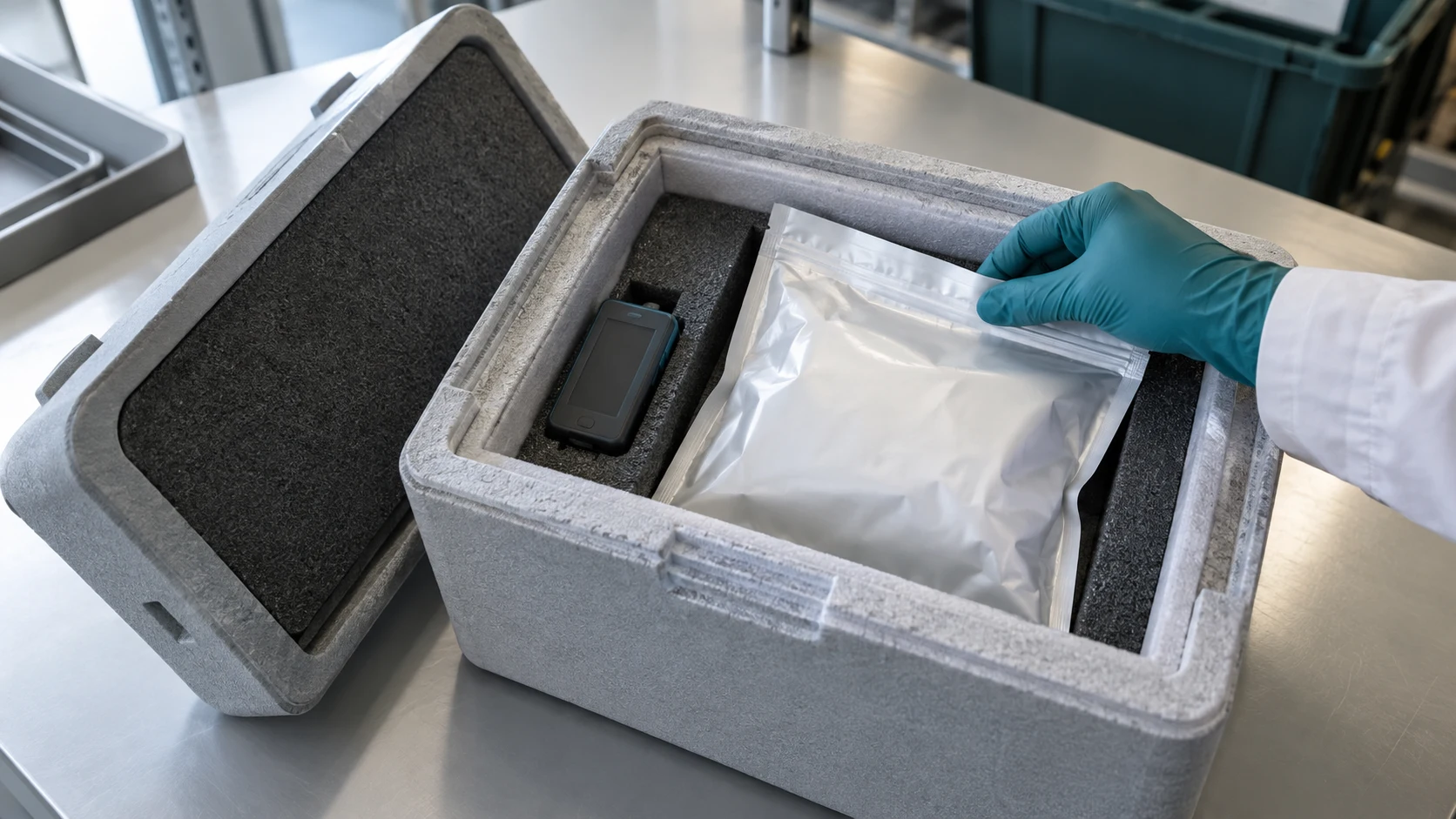
Conceptual receiving scene with a sealed pouch and blank-screen logger in an insulated container
Institutional procurement · Transport evidence

Retatrutide Research Shipments: Decide What Transport Evidence You Need Before Dispatch

A temperature alarm is a reason to hold a shipment for assessment, not a complete verdict on the material. For an institutional research project, agree before dispatch who will review an excursion, which records must accompany the delivery, and what evidence could support acceptance. Ordering a routine purity retest first can spend the sample without resolving the transport question.

Read article